
Springs carry the full weight of your garage door every time it moves, and they wear out on a schedule rather than by accident. Most homeowners find out the hard way, standing in the driveway at seven in the morning with a car locked inside. A broken garage door spring gives you weeks of warning before it snaps, and knowing what to watch for saves you the emergency call.
How Garage Door Springs Wear Out and Why They Fail on a Timetable
Springs are rated by cycles rather than years. One cycle means the door opening once and closing once. The industry baseline for residential springs sits at 10,000 cycles under ANSI/DASMA 103, and DASMA explains the variables that shorten or extend that number in its technical data sheet on spring cycle life.
Work out your own timeline from daily use. A household opening the door four times a day burns through roughly 1,460 cycles a year, which puts a standard spring at around seven years. A family with three drivers, a home office, and a bike in the garage can double that count and reach failure in three or four years.
Two spring types appear on residential doors. Torsion springs mount on a steel shaft above the opening and wind under tension. Extension springs run along the horizontal tracks on either side and stretch as the door rises. Torsion systems last longer and control the door better, which is why most doors built after the 1990s use them.
Neither type gives up without warning. The five signs below appear in order, and catching the first one turns an emergency into a scheduled appointment.
-
The Door Feels Heavy When You Lift It by Hand
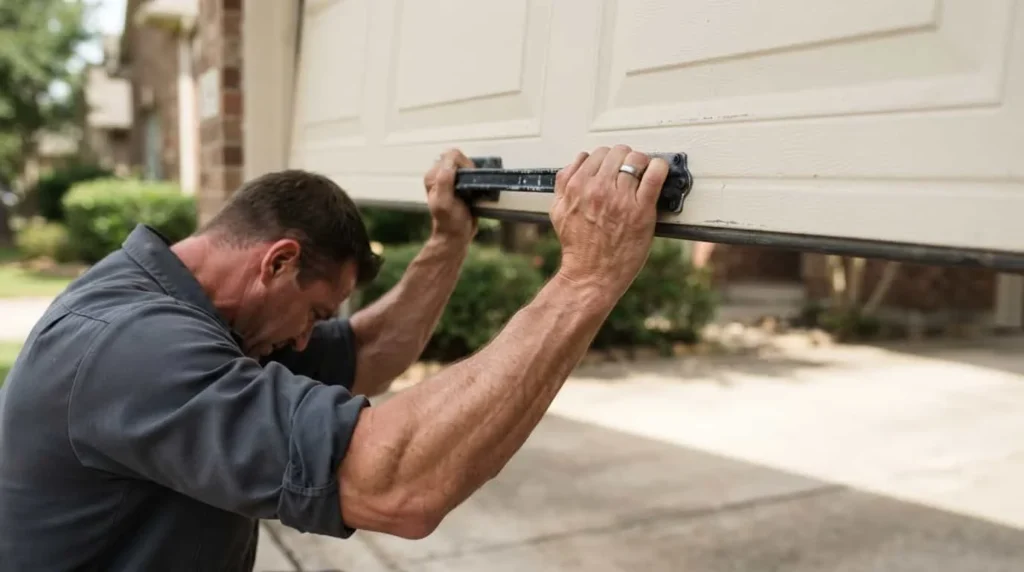
This is the earliest and most reliable sign, and almost nobody checks for it because the opener does the lifting every day.
A garage door weighs between 130 and 400 pounds depending on size, material, and insulation. Springs counterbalance nearly all of that weight, which is why a healthy door feels like 8 to 10 pounds when you lift it manually. Once springs lose tension, that number climbs.
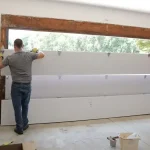
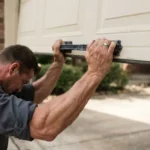
Test it during a quiet moment. Close the door, pull the red release cord to disconnect the opener, then lift the door from the bottom. If the door fights you, if you need both hands and your back, or if you cannot lift it past your waist, the springs have lost their working tension.
Weight changes gradually, so homeowners adjust to it without noticing. Ask somebody who has not lifted the door in a year, and their reaction tells you more than your own memory does.
-
The Door Rises Crooked or Sits Lower on One Side
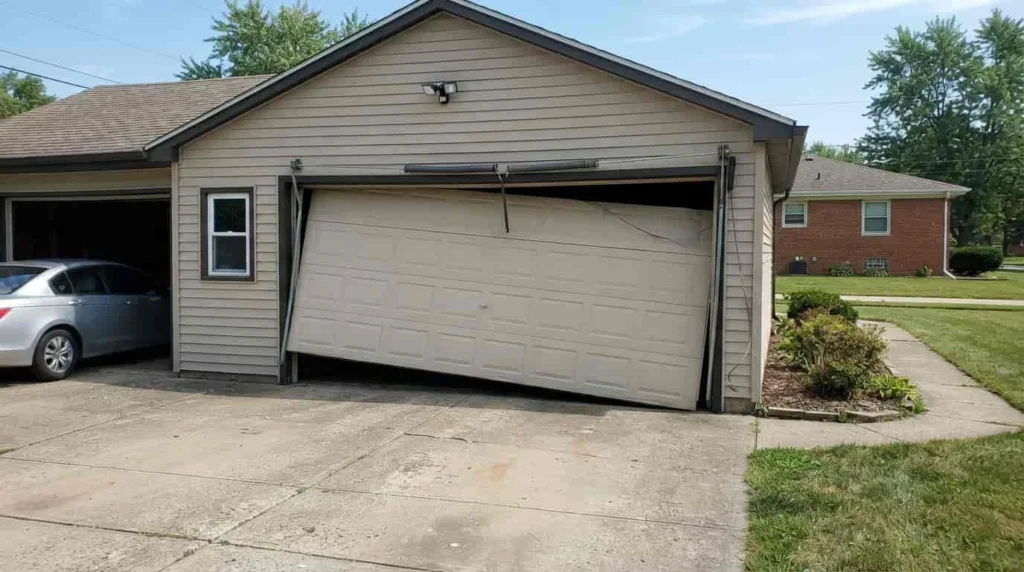
Doors with two springs depend on both pulling with matched force. When one weakens ahead of the other, the door starts travelling unevenly.
Watch the top edge as the door opens. A door in good balance rises level from side to side. A failing spring produces a visible tilt, with one corner leading the other by an inch or more.
The closed position shows it too. Stand outside and look at the gap between the bottom of the door and the driveway. A consistent gap across the width means the system is balanced. A wedge-shaped gap means one side carries more load than it should.
Crooked travel also damages other parts while it continues. Rollers grind against one side of the track, cables wind unevenly on the drums, and the door eventually jams partway through its travel.
-
The Opener Strains, Stalls, or Reverses Partway Up
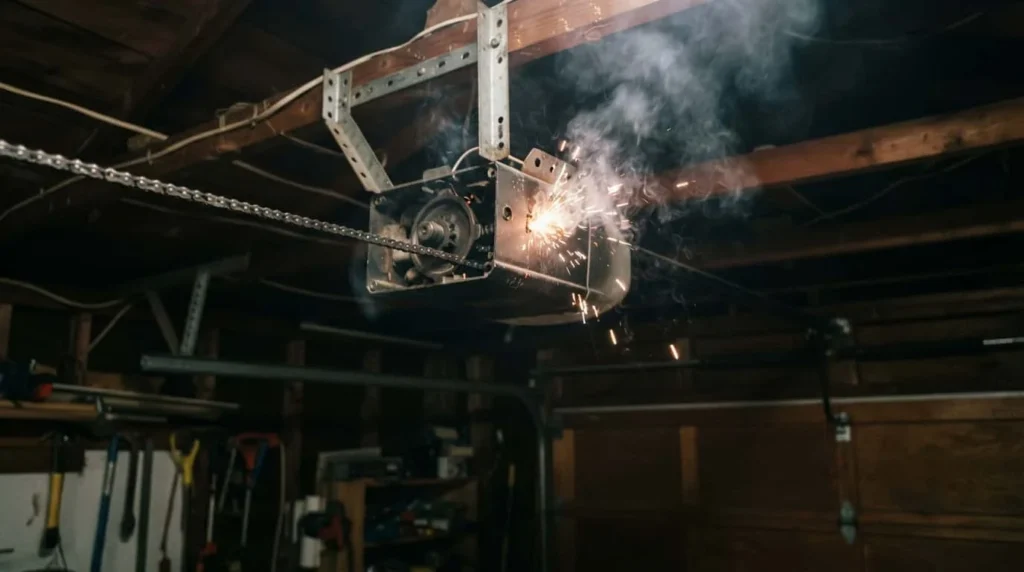
Your opener is not built to lift the door. It guides a counterbalanced door along its path, which is why a half-horsepower motor can move a 300-pound door without difficulty.
Once springs weaken, the motor starts carrying weight the springs should hold. You will notice the change in how it sounds and behaves:
- The motor labours with a deeper, louder tone during the lift
- The door climbs slower than it used to, or pauses partway
- The opener stops and reverses before reaching the top
- The chain or belt jerks at the start of travel
- The unit trips the force setting and shuts off completely
Many homeowners respond by adjusting the opener force setting higher, which hides the problem and burns out the motor within months. When a door needs more force to move than it did last year, the springs changed, not the opener.
Motors that already show damage from months of overloading need a separate look, and garage door opener repair alongside spring replacement restores the whole system rather than half of it.
-
Gaps, Rust, or Stretched Coils Appear Along the Spring
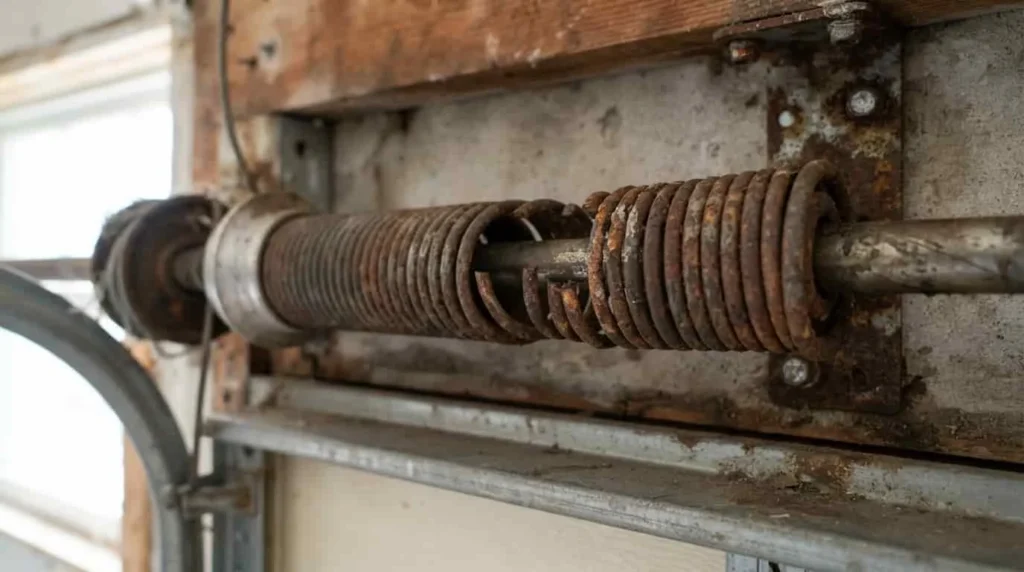
The springs themselves show physical evidence before they let go, and this check takes fifteen seconds with the door closed.
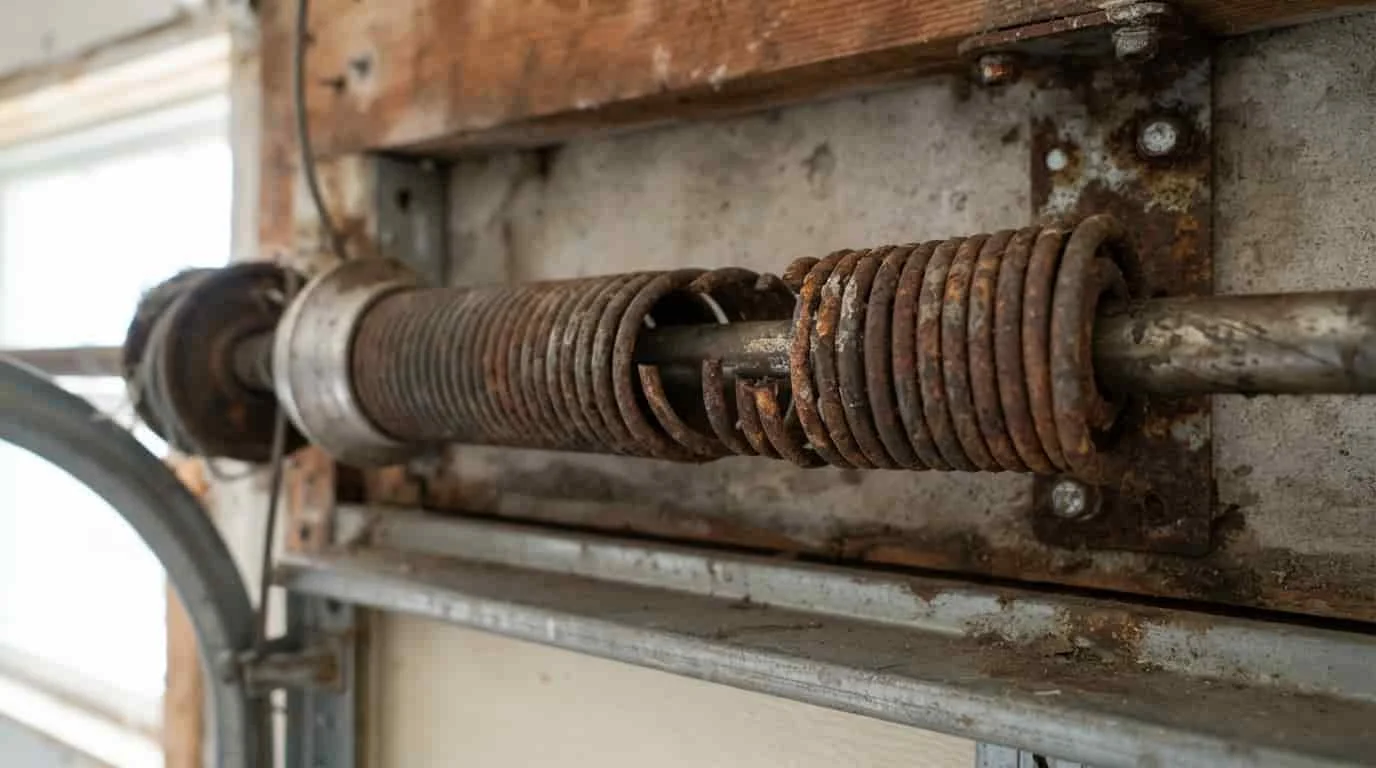
Look at the torsion spring on the shaft above the door. A sound spring shows tight coils packed evenly along its length with no separation. Watch for these conditions:
- A visible gap of two to four inches in the coil, which means the spring has already snapped
- Rust between the coils, which increases friction and creates stress points where cracks start
- Uneven coil spacing, with sections stretched wider than others
- A spring that appears longer than it did when installed
- Flaking or discolouration along the surface metal
Extension springs on the side tracks show different markers. Look for coils that no longer sit flush, a spring that stays stretched when the door is open, or a safety cable running loose inside it.
Extension springs need that safety cable running through the centre. Without it, a snapped extension spring becomes a projectile that travels the length of the garage. Any door running extension springs with no cables needs attention before anything else.
-
The Door Drops Fast or Slams Down When Closing
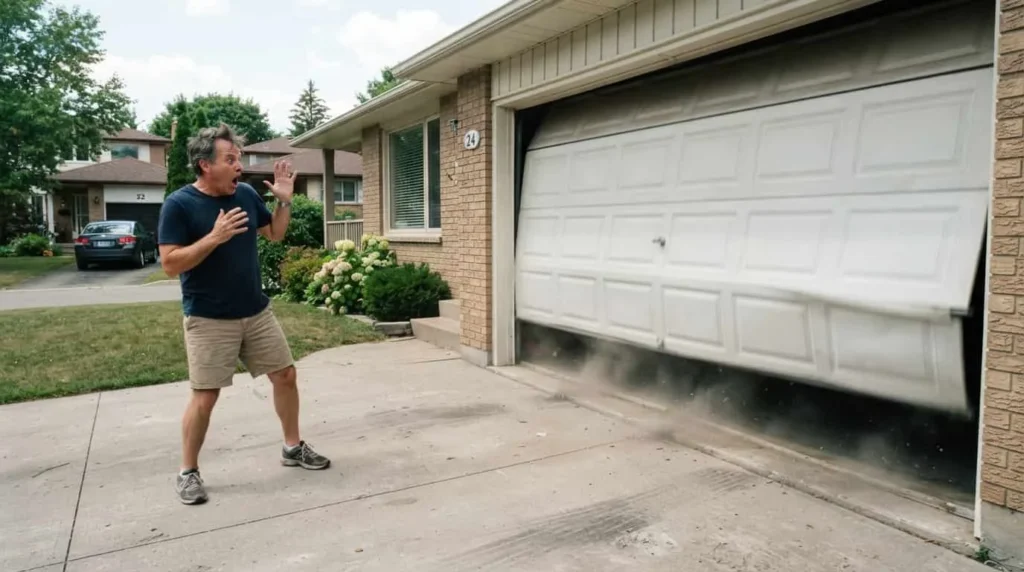
A door with correct spring tension closes at a controlled speed and settles onto the floor. Weakened springs give up their resistance during the downward travel, and gravity takes over.
The sound gives it away. A door that used to close with a soft thump now lands with a bang that shakes the frame. Sometimes the last two feet of travel happen faster than the rest.
This sign carries the most risk of the five. A door that drops without control becomes dangerous around children, pets, and anyone standing in the opening. It also damages the bottom panel, the weather seal, and the concrete apron with every closing.
Test the hold position as a check. Disconnect the opener, lift the door halfway, and let go. A balanced door stays where you put it. A door that slides down on its own has lost the tension holding it there.
What Happens in the Seconds After a Torsion Spring Snaps
Understanding the failure explains why these five signs matter so much.
A wound torsion spring stores a large amount of energy. When the metal fatigues past its limit, that energy releases in a fraction of a second with a sound most homeowners describe as a gunshot. The spring unwinds along the shaft, the coils separate, and the shaft can spin free.
The door becomes dead weight at that instant. If the door was open, the cables and the opener become the only things holding it, and neither was built for that load. If the door was closed, it stays closed and no longer lifts.
Damage rarely stops at the spring. The sudden release commonly frays or snaps the lift cables, throws them off the drums, bends the top section of the door, and strips the opener gear. What could have been one part replaced turns into a repair covering springs, garage door cable replacement, and drum realignment.
Forcing a door with a broken spring makes all of it worse. The door has no counterbalance, and lifting it by hand puts several hundred pounds directly against your grip.
Why Springs in Huntington Station Wear Out Sooner Than the Rating Suggests
Cycle ratings assume ideal conditions, and Long Island rarely provides them.
Coastal air carries salt inland across Huntington Station, Northport, Centerport, and Cold Spring Harbor. Salt accelerates corrosion on spring steel, and rust between the coils creates friction points that concentrate stress. A spring rated for 10,000 cycles on paper often fails closer to 7,000 in salt-exposed garages.
Cold weather adds a second factor. Steel contracts and becomes more brittle in low temperatures, and lubricant thickens at the same time. Most spring failures across Suffolk County happen between December and March, when a spring already near the end of its life meets a January morning.
Humidity through the summer keeps moisture on the coils, which continues the corrosion cycle year round. Garages left open through the day trade heat for moisture-laden air that settles on every metal surface inside.
Two habits extend spring life meaningfully. Spray the coils with a silicone or lithium-based garage door lubricant twice a year, wiping away old buildup first. Keep the garage door closed when nobody is using it, which limits how much salt air reaches the hardware.
The Two-Minute Balance Test That Confirms Spring Wear
This check pulls together several of the signs above and gives you a clear answer before booking anything.
Start with the door fully closed and the opener unplugged for safety. Pull the release cord toward the door to disconnect the trolley. Lift the door slowly with both hands to about waist height, then let go without stepping away.
Read the result:
- The door holds position and the springs still carry the weight correctly
- The door drifts down, and the springs have lost tension
- The door pulls upward, and the springs carry too much tension
- The door binds or catches during the lift and rollers, tracks, or cables need attention alongside the springs
Note how the lift felt as well. Smooth and light means the system is healthy. Rough, heavy, or jerky means something in the counterbalance has changed.
Reconnect the opener afterward by pulling the cord toward the motor and running one complete cycle so the trolley re-engages.
Replacing Both Springs Compared With Replacing Only the Broken One
Homeowners ask this every time, since replacing one spring costs less on the day.
Springs on a two-spring door install together and cycle together. When one fails at 9,000 cycles, the other has run the same 9,000 cycles and sits close behind it. Replacing only the broken spring means a second failure and a second service call within months, usually at a worse moment.
Matched springs also keep the door balanced. A new spring paired with a worn one produces uneven tension, which causes the crooked travel described earlier and puts strain on cables, drums, and the opener.
Ask about cycle rating during the quote. Standard 10,000-cycle springs suit households with light use. High-cycle springs rated for 25,000 or more cost a modest amount extra and double or triple the service life, which suits families opening the door six or more times a day.
Why Spring Replacement Never Belongs on a Weekend Project List
Some garage door work suits a homeowner with basic tools. Spring replacement never does, and the reason is physics rather than skill.
A torsion spring holds hundreds of pounds of force in a wound coil. Releasing it requires winding bars sized to the cone, correct positioning, and controlled quarter-turn movement. A slipped bar becomes a steel rod moving at speed inside a small space, and injuries from this work include broken fingers, fractured arms, and worse.
The tools matter as much as the technique. Screwdrivers and rebar substituted for proper winding bars slip out of the cone under load. Wrong wire gauge or spring length leaves the door unbalanced and the opener overworked from day one.
Correct replacement also involves measuring wire diameter, inside diameter, length, and wind direction, then setting the exact number of turns for your door height and weight. Getting any of those wrong produces a door that drifts, slams, or fails again within a year.
Your Door Is Counting Down, and You Cannot See the Number
Right now the springs above your garage door are somewhere between cycle 6,000 and cycle 10,000, and nothing on the outside tells you which. The failure comes on the coldest morning, with the car inside, the kids late for school, and a door that will not lift no matter how hard you pull. Everything the snap takes with it, the cables, the top panel, the opener gear, turns a straightforward replacement into a repair three times the size.
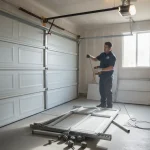
We at Ocean Global Garage Doors replace torsion and extension springs, cables, rollers, tracks, and openers across Huntington Station, Huntington, South Huntington, Melville, Dix Hills, Greenlawn, Elwood, Commack, East Northport, Northport, and nearby Suffolk County communities. Our certified and insured technicians run a full balance and safety inspection, install high-cycle parts, and give you upfront pricing before any work starts, with service available around the clock. Schedule your appointment with Ocean Global Garage Doors and get the springs replaced while it is still your choice rather than an emergency.