
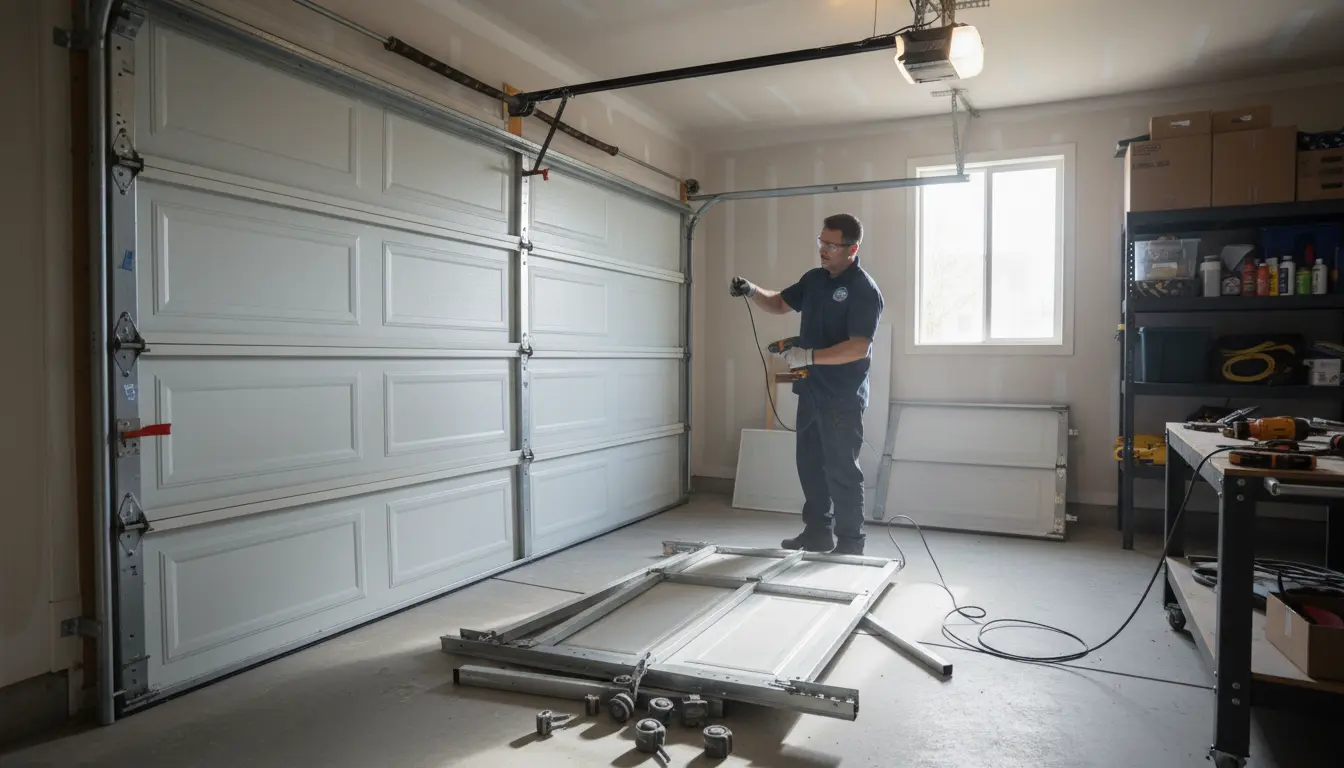
A garage door should make some sound when it opens and closes, but a sudden squeak, grinding noise, rattling, popping sound, or loud vibration deserves attention. Garage doors contain multiple moving components, including rollers, hinges, springs, cables, tracks, and an automatic opener. When one of these parts becomes worn, loose, misaligned, or poorly lubricated, the change in sound can be one of the first signs that something is wrong.
A noisy garage door does not always mean that a major component needs to be replaced. Sometimes the cause is simple, such as loose hardware or insufficient lubrication. Other noises can point to worn rollers, track problems, spring issues, or an opener that needs professional attention.
Knowing what different sounds can mean can help you decide whether basic maintenance is appropriate or whether you should arrange professional service.
What Causes a Garage Door to Become Noisy?
Garage doors operate through a combination of mechanical components that have to move together. Every opening and closing cycle creates movement and vibration. Over time, components can become dirty, loose, worn, or dry.
Common causes of garage door noise include:
- Worn or damaged rollers
- Loose hinges or brackets
- Lack of proper lubrication
- Misaligned or damaged tracks
- Loose chain or belt-drive components
- Problems with the garage door opener
- Worn bearings
- Spring-related problems
- Frayed or damaged cables
- An unbalanced garage door
The type of noise can provide a useful clue about where the problem may be located.
What Does a Squeaking Garage Door Mean?
A squeaking sound often comes from friction between moving components.
Hinges and rollers are two areas worth paying attention to. Hinges allow the individual door sections to flex as the door travels along its tracks. Rollers move within the tracks and help guide the door during opening and closing.
When these components become dry or worn, friction can increase and create a squeaking sound.
Lubrication may reduce noise when the components are otherwise in good condition. However, lubrication is not a substitute for replacing a worn roller, damaged hinge, or other defective component.
If the squeaking returns shortly after maintenance, the underlying component may need to be inspected.
Why Is My Garage Door Grinding?
Grinding is a noise that should not be ignored.
A grinding sound can occur when metal components are rubbing against each other or when a roller is struggling to move correctly through its track. A misaligned track can also create abnormal friction.
The garage door opener itself can be another source. Worn internal gears or other mechanical problems can produce grinding when the opener motor is operating.
Pay attention to when the grinding happens. If the noise occurs only while the opener is running, the opener may need to be examined. If the sound occurs as the door physically travels along the tracks, the rollers, hinges, tracks, or other door hardware may deserve closer inspection.
A persistent grinding sound is a good reason to stop guessing and have the system evaluated.
What Causes a Garage Door to Rattle?
Rattling usually suggests movement or vibration somewhere in the system.
Loose nuts, bolts, brackets, hinges, or other hardware can vibrate while the door moves. The opener rail and mounting hardware can also contribute to rattling if something has loosened.
Garage doors are heavy and operate repeatedly, so vibration over time can affect hardware.
If the door suddenly becomes much louder than it was previously, listen carefully for where the vibration appears to originate. A professional inspection can determine whether the noise is coming from the door itself, the tracks, or the opener.
Do not simply tighten every component you can reach. Some garage door components are connected to systems under significant tension, and certain repairs should be left to trained professionals.
What Does a Popping or Banging Sound Mean?
A loud popping or banging sound can have several causes.
Garage door springs are under significant tension. When a spring breaks, the release of that tension can produce a very loud sound. A broken spring can also make the door much heavier and difficult or impossible for the opener to lift.
A sudden bang can also result from loose or damaged hardware.
If you hear a loud pop and the garage door immediately behaves differently, do not continue operating it repeatedly to see whether the noise disappears. Look for obvious signs such as a visibly separated spring, loose cable, crooked door, or door that suddenly feels much heavier.
If a spring or cable appears damaged, keep clear of the system and arrange professional garage door service.
Can Worn Rollers Make a Garage Door Loud?
Yes. Rollers are one of the components that can contribute significantly to garage door noise.
Rollers guide the door along its tracks. Depending on the garage door system, rollers may use different materials and bearing designs.
As rollers wear, they may become rougher during operation. Damaged bearings, worn wheels, or problems with the roller shaft can increase friction and create squeaking, grinding, or rattling sounds.
Replacing worn rollers can sometimes make a noticeable difference in how smoothly and quietly a garage door operates.
However, roller replacement should be based on the actual condition of the component rather than noise alone.
Could the Garage Door Tracks Be Causing the Noise?
The tracks guide the rollers as the door moves.
If a track becomes bent, damaged, dirty, or misaligned, the rollers may not travel smoothly. This can create rubbing, scraping, grinding, or rattling sounds.
Look at the tracks from a safe position and check for obvious damage, bends, or debris. Do not attempt to force a severely misaligned track back into position.
It is also important to understand that the tracks themselves generally are not something that should simply be coated with lubricant to make them quieter. Lubrication belongs on appropriate moving components, while tracks should generally be kept clean.
A damaged track can affect more than noise. It can also interfere with the door’s movement and place additional stress on other components.
Is the Garage Door Opener Making the Noise?
Sometimes the door is not the actual source of the noise.
The opener contains its own mechanical components and may use a chain, belt, or other drive system depending on the model. A noisy opener can produce grinding, humming, rattling, or other unusual sounds.
A useful clue is whether the noise continues when the door is moving manually. If the door hardware sounds relatively normal but the noise becomes pronounced when the opener engages, the opener may need attention.
An opener that runs but struggles to move the door can also indicate that the door itself is difficult to lift. This is why replacing the opener immediately is not always the right answer.
A technician should determine whether the problem originates in the opener, the door, or the relationship between the two.
Does Lack of Lubrication Cause a Noisy Garage Door?
It can.
Hinges, appropriate rollers, springs, bearings, and other moving components can benefit from proper lubrication as part of routine garage door maintenance. Lubrication reduces friction between compatible moving surfaces.
However, using the wrong product or applying lubricant to the wrong component can create additional problems.
Avoid treating lubrication as a universal solution. If a roller is worn, a spring is broken, a cable is damaged, or a track is misaligned, lubricant will not correct the underlying mechanical problem.
The right maintenance approach is to inspect the system first and then lubricate the components that are designed to receive lubrication.
Should You Fix a Noisy Garage Door Yourself?
Some basic maintenance tasks can be handled by a homeowner, particularly cleaning visible debris, checking for obvious loose hardware, and following the manufacturer’s maintenance recommendations.
Garage door springs, cables, bottom brackets, and other components connected to high-tension systems are a different matter.
These components can store substantial mechanical energy. Attempting to remove, adjust, or replace them without the appropriate tools and knowledge can result in serious injury.
If the door is crooked, suddenly very heavy, off its tracks, has a broken spring, has a damaged cable, or produces a loud popping or grinding sound, professional inspection is the safer approach.
What Type of Noise Should You Never Ignore?
Some warning signs deserve faster attention than an ordinary squeak.
| Garage Door Noise | Possible Cause | Recommended Response |
|---|---|---|
| Squeaking | Dry hinges, rollers, or worn hardware | Inspect and lubricate appropriate components |
| Rattling | Loose hardware, brackets, or drive components | Inspect hardware and opener |
| Grinding | Worn rollers, track problems, or opener components | Arrange an inspection |
| Scraping | Track or roller interference | Stop if the door is binding and have it checked |
| Popping | Spring or mechanical failure | Stop operating the door and seek professional service |
| Loud banging | Broken spring or hardware failure | Keep clear and arrange professional inspection |
| Humming without movement | Opener or electrical/mechanical problem | Have the opener diagnosed |
| Repeated vibration | Loose or worn components | Inspect the door and mounting hardware |
The sound alone cannot provide a definitive diagnosis. Two different problems can produce similar noises, which is why the rest of the door’s behavior matters too.
How Can You Make Your Garage Door Quieter?
Regular maintenance can help prevent some sources of unnecessary noise.
Start by keeping the door and its moving components reasonably clean. Check for visible wear and make sure accessible hardware has not become loose.
Follow the manufacturer’s recommendations for lubrication. Use a lubricant appropriate for garage door components rather than assuming a household spray is suitable for every part.
It is also useful to pay attention to changes in operation. A garage door that gradually becomes louder, slower, shakier, or less balanced is giving you information about its condition.
Routine maintenance can identify worn components before they become larger problems.
When Should You Call for Garage Door Repair in Huntington?
If the noise is accompanied by difficulty opening or closing the door, uneven movement, a broken spring, damaged cables, visible track problems, or unusual opener behavior, professional service is a sensible next step.
This is especially true if the garage door is shaking or making a loud grinding or popping sound.
For homeowners looking for garage door repair in Huntington, the goal should not simply be to make the door quieter. The underlying cause needs to be identified so the repair addresses the actual problem.
A proper inspection can look at the rollers, hinges, tracks, springs, cables, opener, hardware, door balance, and safety features rather than focusing on the noise alone.
Keep a Noisy Garage Door From Becoming a Bigger Problem With Ocean Global Garage Doors
A noisy garage door is easy to dismiss when the door still opens and closes. But unusual sounds can sometimes be an early indication that a component is wearing out or that the system needs maintenance.
Ocean Global Garage Doors provides garage door repair, opener repair, cable and roller replacement, track repair, spring replacement, and preventive maintenance in Huntington Station and surrounding Long Island communities. The company’s stated service process includes safety inspection, diagnostics, an on-site quote, repair, and final testing.
If your garage door is squeaking, rattling, grinding, shaking, or making another unusual sound, getting the cause checked can help you determine whether the problem needs simple maintenance or a more substantial repair.
The right solution depends on what is actually producing the noise. Instead of continuing to operate a door that is becoming louder or harder to use, have the system inspected when the warning signs persist.